> For the complete documentation index, see [llms.txt](https://windows.help.formit.autodesk.com/llms.txt). Markdown versions of documentation pages are available by appending `.md` to page URLs; this page is available as [Markdown](https://windows.help.formit.autodesk.com/zh-cn/tool-library/orthographic-views.md).

# 正交视图

在各种正交视图（包括俯视图、侧视图和仰视图）中查看模型。

![](/files/tG3joWyj7koJ7bTR1uWa)

可以在“视图”菜单中找到正交视图，方法是单击浮动导航工具栏中的“正交”图标，或者使用快捷键 VO。单击浮动导航工具栏中的“俯视图”图标，可访问多个视图选项。

![](/files/o1JqEqzBDde0dSU0H7V1)

**使用正交视图时的一些有用提示：**

* 在正交视图之间切换时，FormIt 会为了一致性而保持缩放级别。
* 切换立面视图（前/右/左/后）时，FormIt 将为了一致性而保持地面高度。
* 在正交视图中平移时，可以按住 Shift 键，以将平移移动锁定到水平轴或垂直轴。
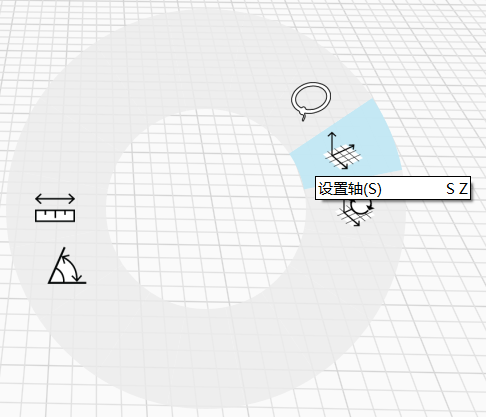
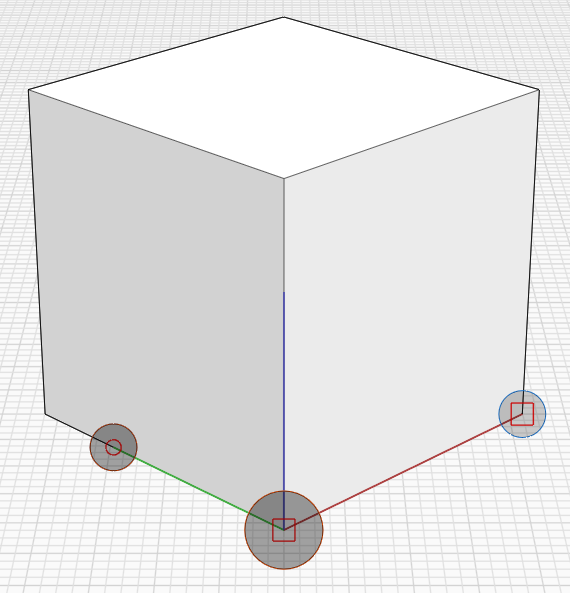
* 正交视图方向基于世界坐标轴。可以重新对齐轴，这将改变所有正交视图的方向：

  * 使用快捷键 SZ，或在空间中单击鼠标右键（不在任何几何图形上）：

  <img src="/files/5nu01egPcA0QXKFEJ6ud" alt="" data-size="original">

  * 设置原点，然后在红色轴上设置夹点以将其与有意义的方向对齐

  <img src="/files/egMT1yohl1dO7RxY5g4U" alt="" data-size="original">

**正交视图与其他 FormIt 功能结合使用：**

* 将立面视图另存为场景，以便可以稍后返回查看。
* 使用图层控制可能妨碍立面视图的几何图形的可见性。
* 添加剖面平面以创建剖面立面。


---

# Agent Instructions
This documentation is published with GitBook. GitBook is the documentation platform designed so that both humans and AI agents can read, navigate, and reason over technical content effectively. Learn more at gitbook.com.

## Querying This Documentation
If you need additional information that is not directly available in this page, you can query the documentation dynamically by asking a question.

Perform an HTTP GET request on the current page URL with the `ask` query parameter, and the optional `goal` query parameter:

```
GET https://windows.help.formit.autodesk.com/zh-cn/tool-library/orthographic-views.md?ask=<question>&goal=<endgoal>
```

`ask` is the immediate question: it should be specific, self-contained, and written in natural language.
`goal` is optional and describes the broader end goal you are ultimately trying to accomplish on behalf of the user. GitBook uses it to tailor the answer towards what is most useful for that goal.

The response will contain a direct answer to the question and relevant excerpts and sources from the documentation.

Use this mechanism when the answer is not explicitly present in the current page, you need clarification or additional context, or you want to retrieve related documentation sections.