> For the complete documentation index, see [llms.txt](https://windows.help.formit.autodesk.com/llms.txt). Markdown versions of documentation pages are available by appending `.md` to page URLs; this page is available as [Markdown](https://windows.help.formit.autodesk.com/tool-library/orthographic-views.md).
# Orthographic Views
View your model in various orthographic views, including top, sides, and bottom.

You'll find orthographic views in the View menu, by clicking the Orthographic icon in the floating navigation toolbar, or by using the shortcut V O. Click the Top View icon in the floating navigation toolbar to access several view options.

**Some helpful hints when working with orthographic views:**
* When switching between orthographic views, FormIt will maintain the zoom level for consistency.
* When switching elevation views (front/right/left/back), FormIt will maintain the ground height for consistency.
* You can hold Shift while Panning in an orthographic view to lock the Pan movement to the horizontal or vertical axis.
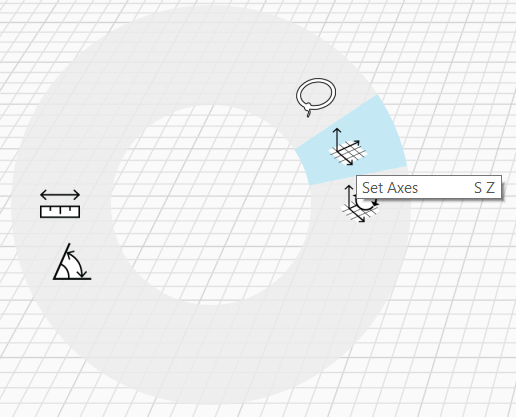
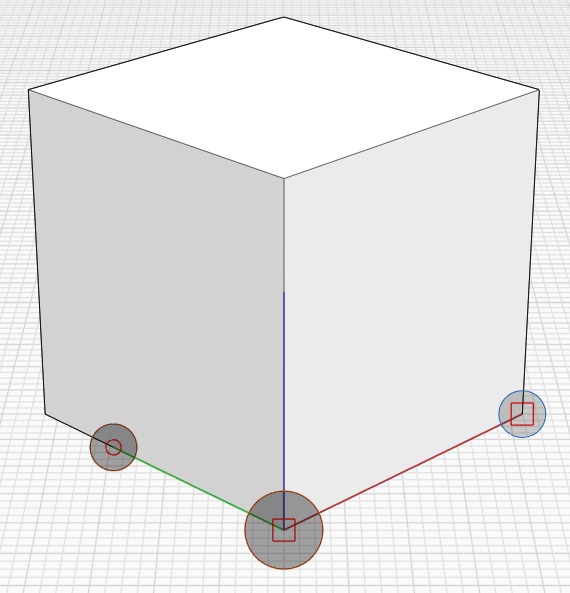
* Orthographic view directions are based on the world axes. You can realign the axes, which will change the orientations of all the orthographic views:
* Use shortcut SZ, or right-click in space (not over any geometry):
 * Set the origin, and set the grip on the red axes to align it with a meaningful direction
 **Orthographic views work in conjunction with other FormIt features:**
* Save elevation views as Scenes so you can return to them later.
* Control visibility of geometry that might get in the way of elevation views using Layers.
* Add Section Planes to create section-elevations.
**Orthographic views work in conjunction with other FormIt features:**
* Save elevation views as Scenes so you can return to them later.
* Control visibility of geometry that might get in the way of elevation views using Layers.
* Add Section Planes to create section-elevations.